


December 15, 2025
Light as Movement
Light moves even when the building stands still.
It shifts, folds, stretches across materials, and tells time without clocks.
Movement is what turns illumination into narrative. In architecture, it defines how a space is read. The way light travels along a corridor, fades across a ceiling, or lands on a handrail decides how the body moves. The role of the designer is to orchestrate that motion until it feels inevitable.
Natural light sets the precedent. The slow rotation of the sun across a façade writes the first choreography of any building. Artificial light, when designed with the same sensitivity, extends that dialogue into the night. In both cases, movement is information. It says: this is the beginning, this is the transition, this is the rest.
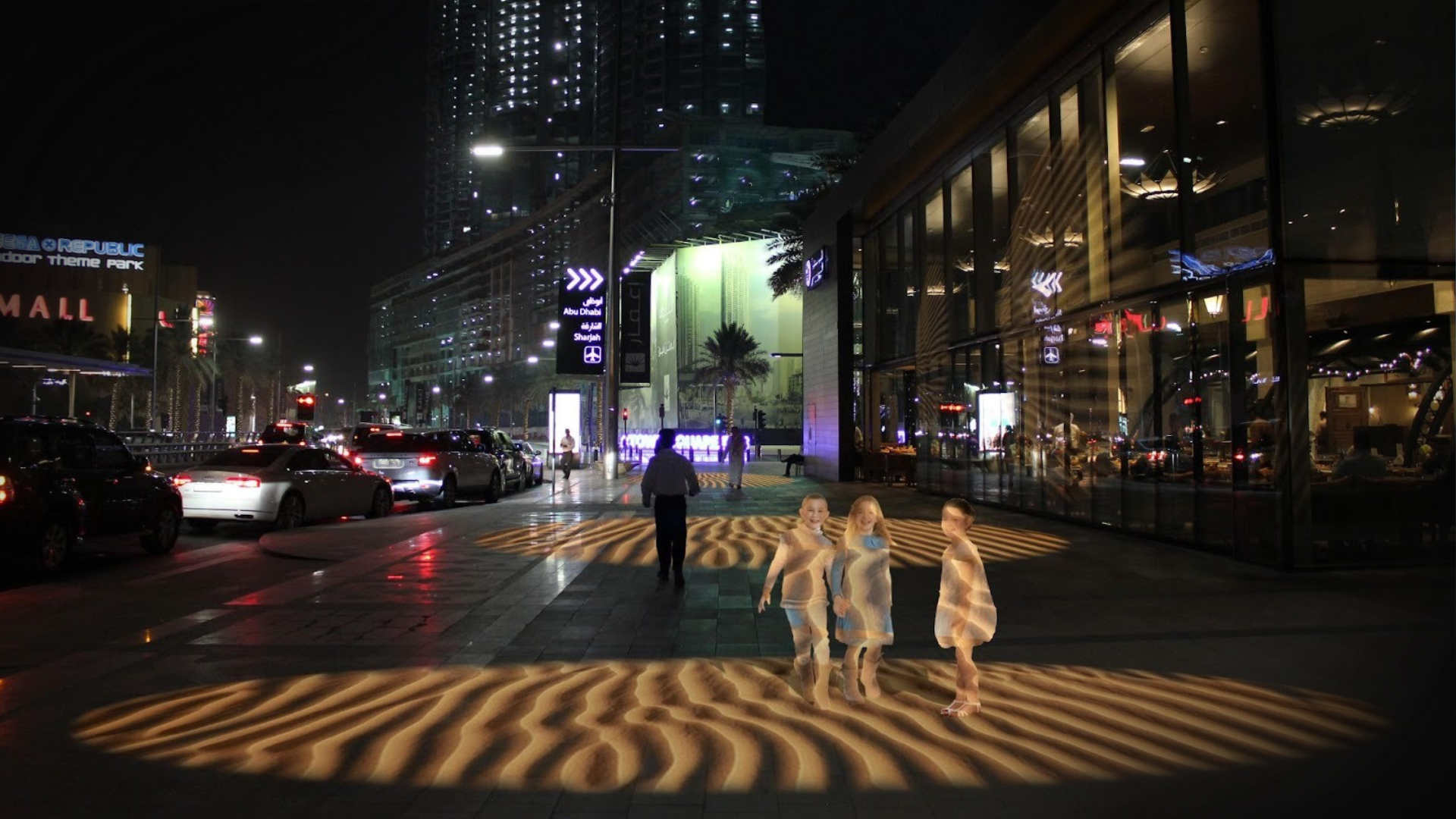
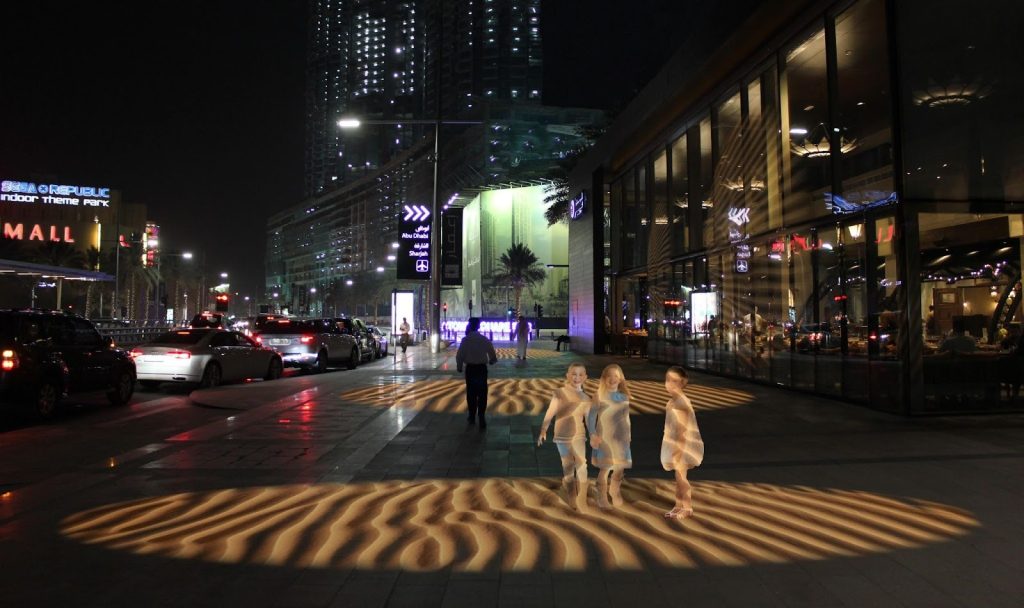
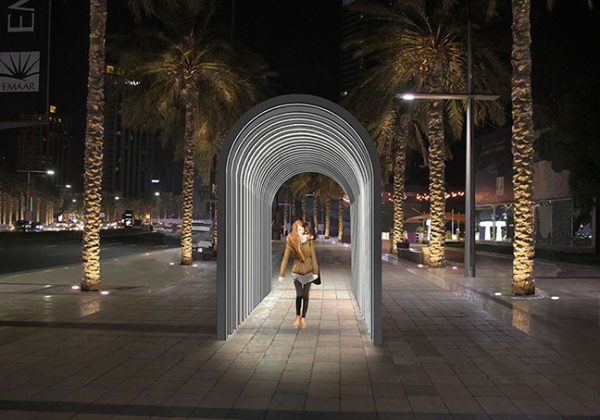
In projects where the architecture resists change, light can become the instrument of flexibility. A museum that adapts scenes for each exhibition. A restaurant that modulates rhythm between lunch and evening. A plaza that mirrors the flow of pedestrians; like our concept for Emaar Boulevard and its central node, Burj Plaza, in Downtown Dubai, where movement redefined how people inhabited the street. Before the intervention, the Boulevard was monumental but static. Light turned it into a sequence. The trees, now lit through shifting gradients, guided circulation and created a visible rhythm across the district. People slowed down, paused, and interacted with their surroundings. The design introduced a pace that architecture alone could not achieve; a choreography that made the city feel alive after dark.
Our senior lighting designer, Masa Suica, describes it simply: “Light should behave like the space is breathing.” That idea shapes everything; from how sensors read occupancy to how reflections move across polished stone.
To design movement is to decide on tempo. Fast changes agitate. Slow fades reassure. Both are tools of composition. When they are tuned with architectural rhythm, the spacing of columns, the order of steps, the scale of openings, the space begins to feel musical.