


December 19, 2025
Light as Identity
We already talked about light as movement, about rhythm, direction, and the way light shapes time and perception.
Now the focus shifts to identity: to how light defines a building’s character and communicates its purpose.
Identity in lighting design is not about colour or intensity. It is about meaning. It translates the architectural idea into atmosphere, connecting what the building represents with how it feels. When done with precision, light becomes an extension of authorship: the architect’s voice carried into the night.
Every project begins with the same question: what should light say about the place?
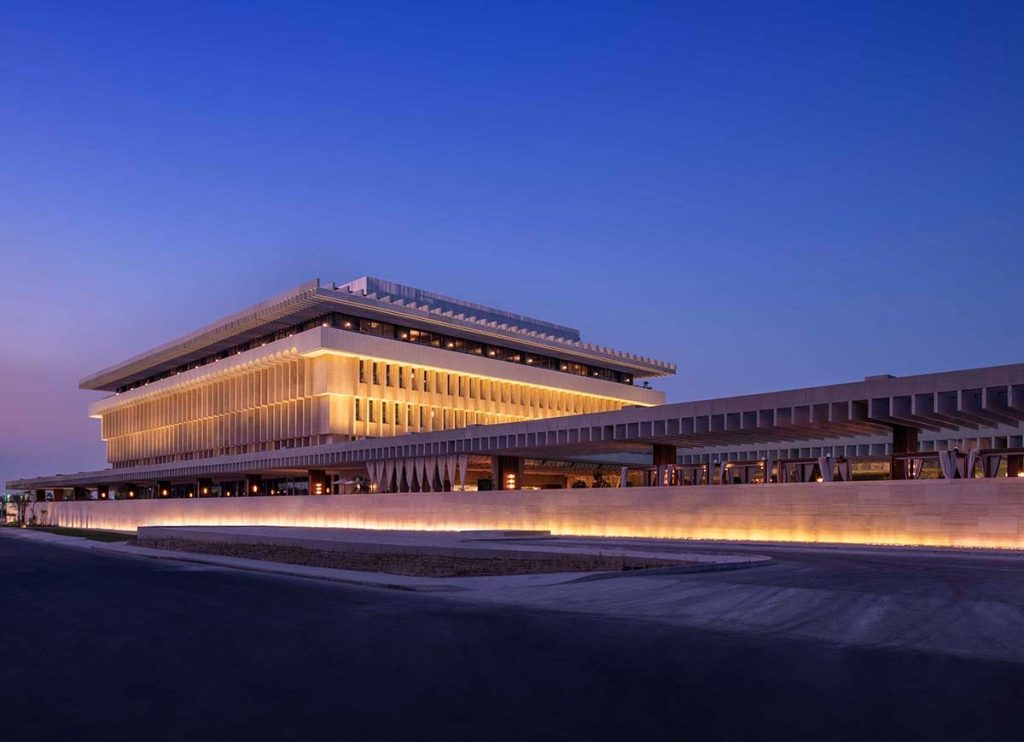
At The Ned Doha, the lighting approach respected the honesty of the architecture. The building’s brutalist geometry and material depth were revealed through reflection rather than exposure. The façade remains largely in shadow, its rhythm legible through controlled highlights. Inside, warm layers soften the structure, creating intimacy within monumentality. The lighting expresses heritage and permanence without nostalgia.
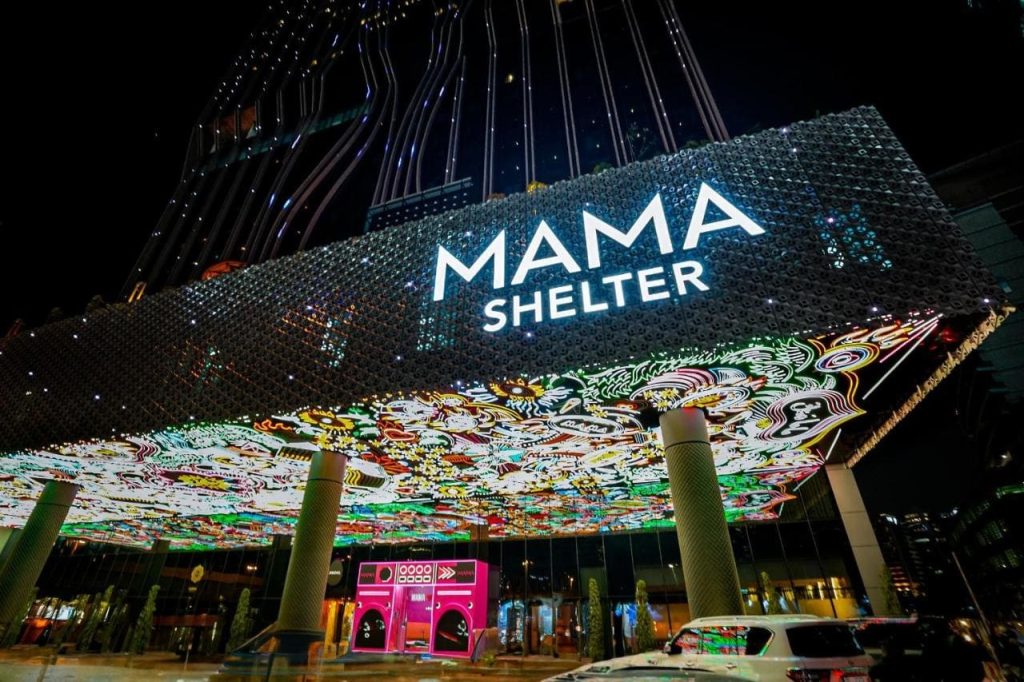
Mama Shelter required the opposite strategy. The brand’s identity thrives on vibrancy and contrast. Light there operates like visual punctuation. It defines each zone by mood, guiding guests through a sequence of atmospheres; social, playful, and personal. The palette shifts from warm and immersive to bright and extroverted, echoing the brand’s creative spirit while maintaining architectural coherence.
When light aligns with architecture, the result feels authentic. It is no longer a layer added at the end but the expression of the place itself.
Across both projects, the principle remains the same. Light as identity must reveal architecture rather than compete with it. It builds recognition through hierarchy and tone.
The façade, the interior, and the transition between them form a single system that communicates how the place should be read and remembered.
In practice, this means balancing emotion and clarity. The human eye needs reference points, and the mind needs meaning. Lighting achieves both when it articulates depth, defines threshold, and evokes response. The result is a space that feels visually consistent and psychologically distinct.
When light aligns with architecture, identity emerges naturally. The building doesn’t simply appear: it declares who it is.