

September 3, 2026
Lighting Beyond Compliance
Lighting design often begins with a set of measurable requirements.
Lux levels, uniformity, glare control, energy performance and local regulations provide a framework for the project. They help define what may be needed for a space to function safely and effectively.
Yet the experience of light often extends beyond what appears in a calculation. Two spaces can meet the same technical criteria and still feel completely different. One may feel calm and intuitive, while another may feel flat or overly bright. The difference may lie in the balance between light and shadow, the distribution of brightness or the relationship between lighting and the architecture around it.
This raises a broader question: what is lighting expected to achieve?
Beyond visibility, light may influence how people enter a space, where they choose to look and how naturally they move through it. A transition between two areas may feel gradual or abrupt. A material may appear richer, softer or more defined depending on how it receives light. These qualities are difficult to measure, yet they remain part of the way architecture is experienced.
The identity of a place may also emerge through these decisions.
Rather than introducing a separate visual language, lighting can help reveal what is already present. It may follow the rhythm of a façade, emphasise texture or reinforce the proportions of an interior. In some cases the lighting becomes a defining visual element. In others, its success lies in being almost unnoticed.

Comfort can be considered in a similar way.
Glare values and illuminance targets provide important guidance, but the eye responds to the complete field of view rather than to a single point. The brightness of walls, ceilings and surrounding surfaces influences how comfortable a room feels, as do the transitions between different lighting conditions.
Atmosphere is perhaps even less defined.
It may emerge through warmth, contrast, restraint or the presence of shadow. It also depends on context. What feels appropriate in a workplace may not feel appropriate in a restaurant, hotel or public landscape. The intention behind the space often shapes the most appropriate lighting response.
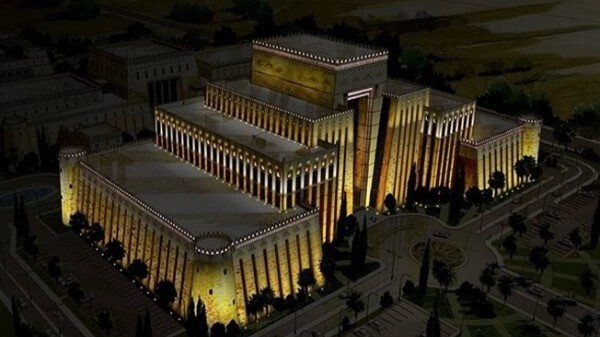
The Ministry of Interior in Qatar offers one example of how lighting design can extend beyond technical performance.
Rather than treating the façade as a single illuminated surface, the lighting strategy responds to the building's architectural composition. Different layers of the architecture are distinguished through carefully considered contrasts, allowing the massing, textures and architectural details to be read more clearly after dark.
The result is not simply a visible building. Light establishes hierarchy, reinforces the architectural proportions and reveals qualities that remain less apparent during the day. At the same time, the project continues to satisfy the functional and operational requirements expected of a public building.
Technical requirements establish the foundation of every project. From there, the design process considers how the architecture is perceived, how people experience the space and where light can contribute most meaningfully.